Faster than most people think. Under the right conditions, mold can begin growing within 24 to 48 hours of moisture exposure — which means the leak you're planning to "deal with this weekend" may already be a mold problem by the time you get to it.
Raleigh's humidity doesn't help. Between our warm, wet summers and homes with crawl spaces, attics, and bathrooms that trap moisture, the Triangle has exactly the kind of climate mold needs to take hold quickly once water gets somewhere it shouldn't be.
Why mold moves so fast
Mold spores are already present in virtually every home and in the outside air — they're everywhere, all the time. They only need three things to start growing: a food source (drywall, wood, dust, and insulation all qualify), the right temperature range (most household mold thrives between 60–80°F, which is most of the year in NC), and moisture. Take away the "no moisture" part, even briefly, and the other two conditions are already met.
That's why a leak that seems minor — a slow drip under a sink, a small roof leak after a storm, a washing machine hose that's been seeping for a few days — can turn into a mold problem before you've even noticed a stain.
Signs you may already have mold
- A musty, earthy smell that doesn't go away with cleaning, especially in bathrooms, basements, or near an exterior wall
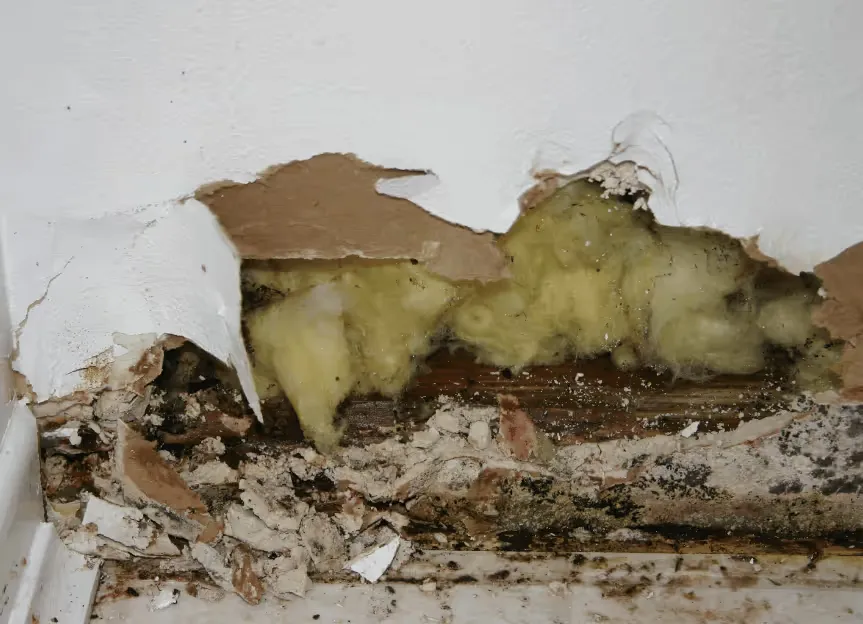
- Discoloration on drywall, ceiling tiles, or around windows — often greenish, black, or dark gray
- Warped, bubbling, or peeling paint or wallpaper
- Any history of water damage, past or present, in a room — even if it was "fixed" at the time
- Increased allergy-like symptoms (sneezing, congestion, irritated eyes) that improve when you leave the house
Why "just cleaning it" often isn't enough
Surface cleaning can remove visible mold from a hard surface, but it doesn't address mold that's grown inside a wall cavity, under flooring, or in insulation — and it does nothing to fix the moisture source that let it grow in the first place. If the moisture problem isn't identified and corrected, mold typically comes back.
This is the part that actually matters most: mold remediation isn't just removal, it's removal and correcting whatever let the moisture in to begin with, whether that's a plumbing leak, poor crawl space ventilation, or a roof that needs repair.
What proper mold remediation looks like
When we handle a mold job, we inspect the property to find the actual moisture source (not just the visible mold), contain the affected area so spores don't spread to the rest of the home during removal, safely remove the mold and any materials that can't be salvaged, and then address the underlying cause — whether that means a plumbing fix, ventilation improvement, or reconstruction of the affected area. One team handles the full process, so there's no gap between "the mold is gone" and "the reason it grew is fixed."
If you're seeing signs of mold
Don't wait for it to spread. If you've had any kind of leak or moisture issue in the last few days — or you're noticing a musty smell you can't place — call Triangle Restoration at (919) 752-5142. Our IICRC-certified team serves Raleigh, Cary, Durham, and the rest of the Triangle, and we can tell you quickly whether what you're dealing with needs professional remediation.